
Przestrzeń kosmiczna stanowi współcześnie jeden z istotnych obszarów rywalizacji strategicznej pomiędzy państwami. Postępujące uzależnienie funkcjonowania krajów i ich sił zbrojnych od systemów satelitarnych sprawia, że zdolność do ochrony własnej infrastruktury orbitalnej, a także do zakłócania lub neutralizowania systemów przeciwnika, nabiera coraz większego znaczenia z perspektywy bezpieczeństwa narodowego i międzynarodowego. W konsekwencji rozwój technologii przeciwsatelitarnych (ang. Anti-satellite Weapon – ASAT) oraz innych zdolności umożliwiających prowadzenie działań o charakterze ofensywnym w przestrzeni kosmicznej staje się nowym wymiarem współczesnej rywalizacji militarnej.
Rosyjski potencjał nuklearny w przestrzeni kosmicznej w trzeciej dekadzie XXI wieku
Federacja Rosyjska od wielu lat rozwija zdolności pozwalające na prowadzenie tego rodzaju działań, traktując przestrzeń kosmiczną jako krytyczne środowisko własnego potencjału wojskowego i strategicznego. Wiodące znaczenie dla międzynarodowej debaty na temat rosyjskich zdolności kosmicznych miał rok 2024, kiedy to w Stanach Zjednoczonych ujawniono informacje wywiadowcze wskazujące na rozwój przez Rosję nowych, potencjalnie destabilizujących zdolności militarnych w przestrzeni kosmicznej (Bo Lillis et al. ‘Russian nuclear capabilities in space’).
Informacje te, przedstawione w lutym 2024 roku członkom Kongresu Stanów Zjednoczonych przez ówczesnego przewodniczącego Komisji ds. Wywiadu Izby Reprezentantów, Mike’a Turnera, wywołały dyskusję dotyczącą charakteru rosyjskiego programu kosmicznego oraz możliwego wykorzystania technologii o charakterze nuklearnym przeciwko infrastrukturze satelitarnej (Shalal et al. ‘White House’). Wydarzenia te należy jednak postrzegać nie jako początek rosyjskiego zbrojenia przestrzeni kosmicznej, lecz jako kolejny etap rozwoju zdolności, które od lat stanowią przedmiot zainteresowania i obaw społeczności międzynarodowej.
Użycie kosmicznej broni nuklearnej w świetle międzynarodowego prawa kosmicznego
W międzynarodowym prawie kosmicznym obowiązują dwa traktaty zakazujące wyścigu zbrojeń w kosmosie. Pierwszym z nich jest Układ o zakazie prób broni nuklearnej w atmosferze, w przestrzeni kosmicznej i pod wodą sporządzony w Moskwie dnia 5 sierpnia 1963 r. Obecnie stronami Traktatu jest 125 państw (Office for Disarmament Affairs United Nations ‘Treaty Banning Nuclear Weapon Tests in the Atmosphere, in Outer Space and Under Water’).
Najważniejszym celem Układu była potrzeba wyhamowania procesu zbrojeń, produkcji oraz przeprowadzania testów broni, z uwzględnieniem broni nuklearnej. Państwa zobligowane są do podejmowania działań zapobiegających testowaniu środków bojowych, w trakcie którego istnieje prawdopodobieństwo wystąpienia eksplozji nuklearnej w dowolnym rejonie znajdującym się pod kontrolą bądź jurysdykcją danego kraju.
Drugą istotną regulację stanowi Traktat o przestrzeni kosmicznej z 1967 r., którego sygnatariuszami jest 110 państw (Office for Disarmament Affairs United Nations ‘Treaty on Principles Governing the Activities of States in the Exploration and Use of Outer Space, including the Moon and Other Celestial Bodies’), w tym Rosja. Postanowieniazawarte w niniejszym dokumencie gwarantują państwom udzielenie przyzwolenia na realizację badań naukowych na powierzchni ciał niebieskich i w przestrzeni kosmicznej.
Rozwój gospodarczy, postęp naukowy i zasoby technologiczne będące w posiadaniu tychże podmiotów nie generuje występowania dyskryminacji, ponieważ przestrzeń kosmiczna stanowi wspólne dobro, a kraje posiadają do niej dostęp na zasadzie równości. Zabrania się zawłaszczania jakiegokolwiek terytorium na ciałach niebieskich i dowolnego rejonu przestrzeni kosmicznej, a także nie dopuszcza się ich okupowania, użytkowania bądź ogłoszenia statusu suwerenności.
Względem wyścigu zbrojeń, Układ rozgranicza wynoszenie i testowanie broni nuklearnej do przestrzeni kosmicznej, a zarazem zakazuje umieszczania ich elementów na ciałach niebieskich, podobnie jak budowania baz, instalacji wojskowych, fortyfikacji militarnych, realizacji manewrów przez siły zbrojne.
Rosyjski potencjał rozwoju napędów jądrowych do zastosowań militarnych w kosmosie
Od 2021 roku zauważalna jest dynamiczna tendencja rozwojowa technologii nuklearnych do zastosowań militarnych w kosmosie inicjowana przez Rosję. Przedsięwzięcia te dotyczą głównie testowania napędów jądrowych. Przykładem aktualnie doskonalonego projektu jest zbudowanie pierwszego kosmicznego statku transportowego, którego wdrożenie planowane jest w 2030 roku.
Za pośrednictwem tego rodzaju jednostek napędowych ma być również zasilany system Zeus dedykowany usuwaniu śmieci kosmicznych z orbity okołoziemskiej (Interfax ‘Russia’s new nuclear space tug’). Równocześnie ogłoszono zrealizowanie udanych testów eksperymentalnych pocisków manewrujących dalekiego zasięgu napędzanych energią jądrową. Warto podkreślić potencjał militarny Rosji w aspekcie doskonalenia pocisków hipersonicznych, które wykonują loty z prędkością powyżej pięciu Machów, a także mogą przenosić bojowe głowice nuklearne. Przykładami takich środków są Zircon i Kinzhal, oba zostały użyte podczas konfliktu na Ukrainie. Rosja należy do państw, które konsekwentnie rozwijaj zdolności nuklearne. W latach 1969-1988 z terytorium ZSRR na niską orbitę okołoziemską wystrzelono 33 obiekty zwiadowcze i celownicze z reaktorami jądrowymi.
Od lat ‘80. trwają próby wdrożenia technologii jądrowych w satelitach. Ich szczegółowe parametry taktyczno-techniczne nie są ujawnione, lecz prawdopodobnie byłyby wynoszone na niskie, średnie i geosynchroniczne orbity, a także zdolne do prowadzenia rozpoznania radarowego i aktywnej walki radioelektronicznej
(Dress ‘Russia’s nuclear ambitions in space’). Na podstawie tych doświadczeń można przypuszczać, że Federacja Rosyjska aktualnie rozwija ASAT z głowicami nuklearnymi do kinetycznego niszczenia satelitów lub z napędem nuklearnym. W obu przypadkach wynoszenie do kosmosu tego rodzaju technologii równałoby się z
naruszeniem Traktatu o przestrzeni kosmicznej z 1967 roku.
Konsekwencje zastosowania zdolności nuklearnych w przestrzeni kosmicznej
Operacyjne użycie broni jądrowej w kosmosie wywarłoby efekt obosieczny. Oznacza to, że wyeliminowaniu nie uległby wyłącznie cel znajdujący się w przestrzeni kosmicznej. Równocześnie w stronę Ziemi zostałby skierowany wysokoenergetyczny impuls elektromagnetyczny. Wówczas istniałoby ryzyko, iż zniszczeniu ulegnie pewien obszar infrastruktury naziemnej. Detonacja ładunku nuklearnego o niewielkiej mocy może doprowadzić do zagłuszenia systemów komunikacji satelitarnej, a także ich fizycznej destrukcji poprzez spalenie wewnętrznej architektury technicznej.
Zakłócanie pracy lub niszczenie satelitów stanowi poważne zagrożenie. Współcześnie są one wykorzystywane dla celów militarnych i niemilitarnych, posiadają również globalny wpływ na obecne realia życia. Warto przytoczyć przykład roju satelitów Starlink firmy SpaceX, które pełniły bardzo ważną funkcję dla ukraińskich sił zbrojnych w koordynowaniu ataków bezzałogowych statków powietrznych i artylerii przeciwko siłom rosyjskim.
Broń kosmiczna wykorzystująca zdolności radioelektroniczne do zagłuszania sygnałów satelitarnych mogłaby skutecznie je unieszkodliwić. Spowodowałoby to uniemożliwienie działania systemów naprowadzania systemów GPS, oślepienie satelitów szpiegowskich i utrudnienie koordynacji sił zbrojnych na całym świecie (Hsu ‘Russia’s space weapon’).
Konkluzje
Po pierwsze, traktaty kosmiczne stanowią pierwotne źródła międzynarodowego prawa kosmicznego i niedostatecznie odpowiadają współczesnym potrzebom ograniczenia postępującego procesu militaryzacji, a przede wszystkim zbrojenia nastawionego na ofensywne działania militarne. Państwa, które je przyjęły oraz ratyfikowały posiadają możliwość wystąpienia z zawartych układów w dowolnym momencie. Regulacje prawne posiadają wyraźną lukę wobec obecnej aktywności państw w domenie kosmicznej, ze szczególnym uwzględnieniem możliwości realizacji przez nich operacji o charakterze ofensywnym
Po drugie, od czasu uznania kosmosu za piąty wymiar walki zbrojnej przez NATO w 2019 roku, Rosja konsekwentnie rozwija kosmiczny potencjał militarny, pełniący funkcję głównie odstraszania strategicznego. W 2021 roku nastąpił gwałtowny skok technologiczny ukierunkowany na doskonalenie napędów jądrowych. Mogą być one z powodzeniem implementowane w pociskach przeciwsatelitarnych zamiast napędu rakietowego lub stanowić typ głowicy bojowej do kinetycznego rażenia satelitów. Umieszczanie ASAT w przestrzeni kosmicznej bądź wystrzelenie z miejsca bazowania naziemnego jest zasadne w sytuacji zagrożenia kolizją dwóch lub więcej obiektów kosmicznych, lecz międzynarodowe prawo kosmiczne zabrania wykorzystania dowolnych technologii nuklearnych do celów bojowych w tym środowisku naturalnym.
Po trzecie, detonacja ładunku jądrowego w przestrzeni pozaziemskiej niesie za sobą bardzo poważne konsekwencje zarówno dla środowiska kosmicznego jak i powierzchni Ziemi. Polegają one na gwałtownych wybuchach świetlnych, rozprzestrzenianiu się promieniotwórczych opadów, kinetycznemu zwalczaniu obiektów kosmicznych, a w efekcie – powstawaniu śmierci kosmicznych. Co więcej, może zostać również zakłócona naturalna równowaga wskutek tworzenia się sztucznie wywołanych zorzy polarnych. Społeczeństwo musi zostać uwrażliwione na postrzeganie kosmosu jako nowego wymiaru prowadzenia walki zbrojnej przez państwa oraz możliwych skutkach, które będą oddziaływać na infrastrukturę naziemną i środowiskową.
Aleksandra Radomska
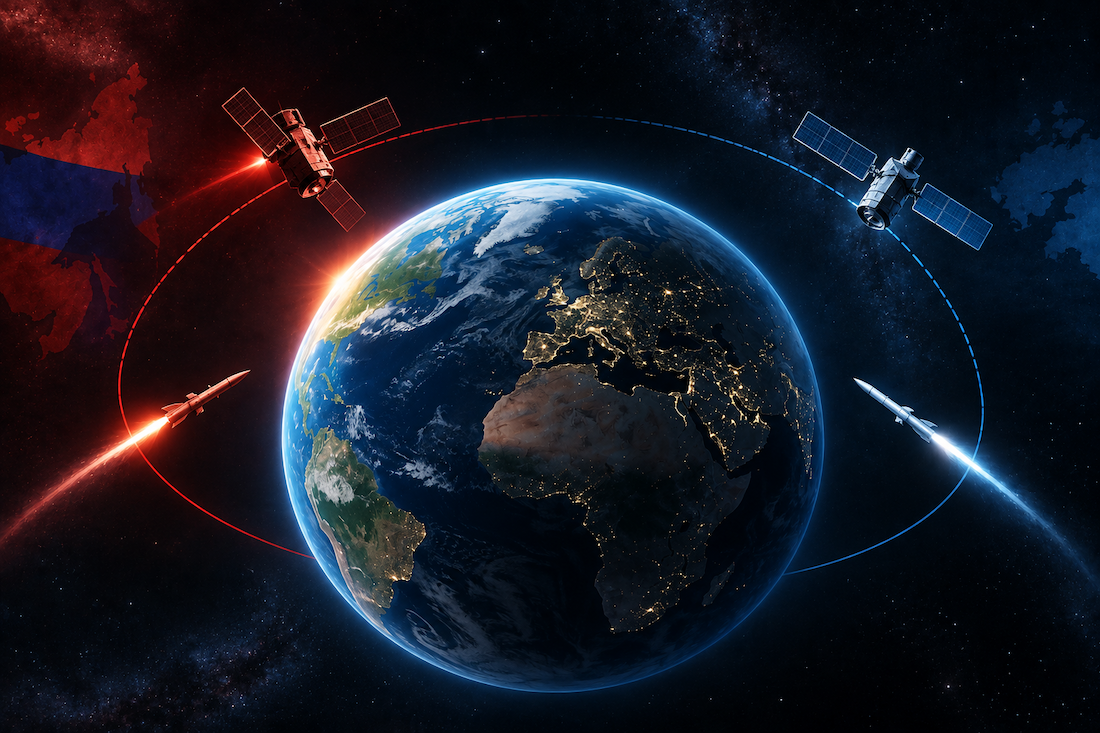
Grafika: Waldemar Pruss (AI)
Nuclear rivalry extends into space: Russian capabilities and international security
Space is currently one of the key areas of strategic rivalry among nations. The growing dependence of nations and their armed forces on satellite systems means that the ability to protect one’s own orbital infrastructure, as well as to disrupt or neutralize an adversary’s systems, is becoming increasingly important from the perspective of national and international security. Consequently, the development of anti-satellite weapon (ASAT) technologies and other capabilities enabling offensive operations in space is becoming a new dimension of modern military competition.
Russia’s Nuclear Capabilities in Outer Space in the Third Decade of the 21st Century
For many years, the Russian Federation has been developing capabilities that enable it to conduct such activities, viewing outer space as a critical domain for its military and strategic potential. The year 2024 was pivotal for the international debate on Russian space capabilities, when intelligence information was disclosed in the United States indicating that Russia was developing new, potentially destabilizing military capabilities in space (Bo Lillis et al., ‘Russian Nuclear Capabilities in Space’).
This information, presented in February 2024 to members of the U.S. Congress by the then chairman of the House Intelligence Committee, Mike Turner, sparked a discussion regarding the nature of the Russian space program and the possible use of nuclear technology against satellite infrastructure (Shalal et al., ‘White House’). However, these events should be viewed not as the beginning of Russia’s militarization of space, but as the next stage in the development of capabilities that have been a subject of interest and concern for the international community for years.
Use of space-based nuclear weapons under international space law
There are two treaties in international space law that prohibit an arms race in space. The first is the Treaty Banning Nuclear Weapon Tests in the Atmosphere, in Outer Space and Under Water drawn up in Moscow on 5 August 1963. Currently, 125 states are parties to the Treaty (United Nations Office for Disarmament Affairs ‘Treaty Banning Nuclear Weapon Tests in the Atmosphere, in Outer Space and Under Water’).
The most important objective of the Treaty was the need to curb the process of armament, production and testing of weapons, including nuclear weapons. States are obliged to take measures to prevent the testing of munitions in the course of which there is a likelihood of a nuclear explosion in any area under the control or jurisdiction of the country.
The second important regulation is the Outer Space Treaty 19671, to which 110 states are signatories (United Nations Office for Disarmament Affairs ‘Treaty on Principles Governing the Activities of States in the Exploration and Use of Outer Space, including the Moon and Other Celestial Bodies’), including Russia. The provisions contained in this document ensure that states are granted permission to carry out scientific research on the surface of celestial bodies and in outer space.
The economic development, scientific progress and technological resources held by these entities do not generate the occurrence of discrimination, as space is a common good and countries have access to it on an equal basis. The appropriation of any territory on celestial bodies and of any region of outer space is prohibited, and their occupation, use or declaration of sovereignty status is not permitted.
With regard to the arms race, the Treaty demarcates the taking and testing of nuclear weapons into space, while prohibiting the placement of their elements on celestial bodies, as well as the construction of bases, military installations, military fortifications, the implementation of manoeuvres by armed forces.
Russian potential to develop nuclear propulsion systems for military applications in space
Since 2021, there has been a noticeable dynamic trend in the development of nuclear technology for military applications in space initiated by Russia. These ventures mainly concern the testing of nuclear propulsion systems. An example of a project currently being perfected is the construction of the first space transport vehicle, which is scheduled for deployment in 2030.
The Zeus system dedicated to the removal of space junk from Earth orbit is also to be powered by this type of propulsion unit (Interfax ‘Russia’s new nuclear space tug’). At the same time, successful tests of experimental nuclear-powered long-range cruise missiles were announced. It is worth highlighting Russia’s military potential in the aspect of perfecting hypersonic missiles, which perform flight at speeds above Mach five and can carry nuclear warheads. Examples of such means are the Zircon and Kinzhal, both of which were used during the conflict in Ukraine. Russia is one of the countries that consistently develop nuclear capabilities. Between 1969 and 1988, 33 reconnaissance and targeting objects with nuclear reactors were launched into low Earth orbit from USSR territory.
Since the ‘80s, there have been attempts to implement nuclear technologies in satellites. Their detailed tactical and technical parameters are not disclosed, but they would probably be launched into low (LEO), medium (MEO) and geosynchronous orbits (GEO), as well as capable of radar reconnaissance and active radioelectronic warfare (Dress ‘Russia’s nuclear ambitions in space’). Based on this experience, it can be assumed that the Russian Federation is currently developing ASATs with nuclear warheads for kinetic destruction of satellites or with nuclear propulsion. In either case, launching this type of technology into space would amount to a violation of the Outer Space Treaty 1967.
Consequences of using nuclear capabilities in space
The operational use of nuclear weapons in space would have a double-edged effect. This means that only a target in space would not be eliminated. At the same time, a high-energy electromagnetic pulse would be directed towards Earth. There would then be a risk that an area of terrestrial infrastructure would be destroyed. The detonation of a low-power nuclear payload could jam satellite communication systems, as well as their physical destruction by burning down the internal technical architecture.
Disrupting or destroying satellites is a serious threat. Today, they are used for military and non-military purposes and have a global impact on the realities of life today. It is worth citing the example of SpaceX’s Starlink swarm of satellites, which performed a very important function for the Ukrainian armed forces in coordinating unmanned aircraft and artillery attacks against Russian forces.
Space weapons using radioelectronic capabilities to jam satellite signals could effectively disable them. This would render GPS guidance systems inoperable, blinding spy satellites and impeding the coordination of military forces around the world (Hsu ‘Russia’s space weapon’).
Conclusions
First of all, the space treaties are the primary sources of international space law and do not adequately meet contemporary needs to curb the growing militarisation process and, above all, offensive military-oriented armaments. The states that have adopted and ratified them have the possibility to withdraw from the concluded treaties at any time. The legal regulations have a clear gap in view of the current activities of states in the space domain, with particular reference to their ability to carry out operations of an offensive nature.
Secondly, since the recognition of space as the fifth dimension of armed combat by NATO in 2019, Russia has been consistently developing a space-based military capability with a function mainly of strategic deterrence. In 2021, there has been a rapid technological leap focused on perfecting nuclear propulsion systems. They can be successfully implemented in anti-satellite weapon instead of rocket propulsion or be a type of warhead for kinetic satellite strikes. Placing ASATs in space or launching them from a ground-based location is legitimate in the threat of a collision between two or more space objects, but international space law prohibits the use of any nuclear technology in this environment.
Thirdly, the detonation of a nuclear payload in extraterrestrial space has very serious consequences for both the space environment and the Earth’s surface. These involve violent light bursts, the spread of radioactive fallout, the kinetic eradication of space objects and, as a result, the formation of space deaths. Moreover, the natural balance can also be disrupted by the formation of artificially induced auroras. The public needs to be sensitised to the perception of space as a new dimension for the conduct of armed warfare by states and the possible impacts that will affect terrestrial and environmental infrastructure.
Aleksandra Radomska
Graphic: Waldemar Pruss (AI)